Search This Blog

Showing posts with label USB. Show all posts

Friday, March 13, 2015

Power Cord User Interface Design.

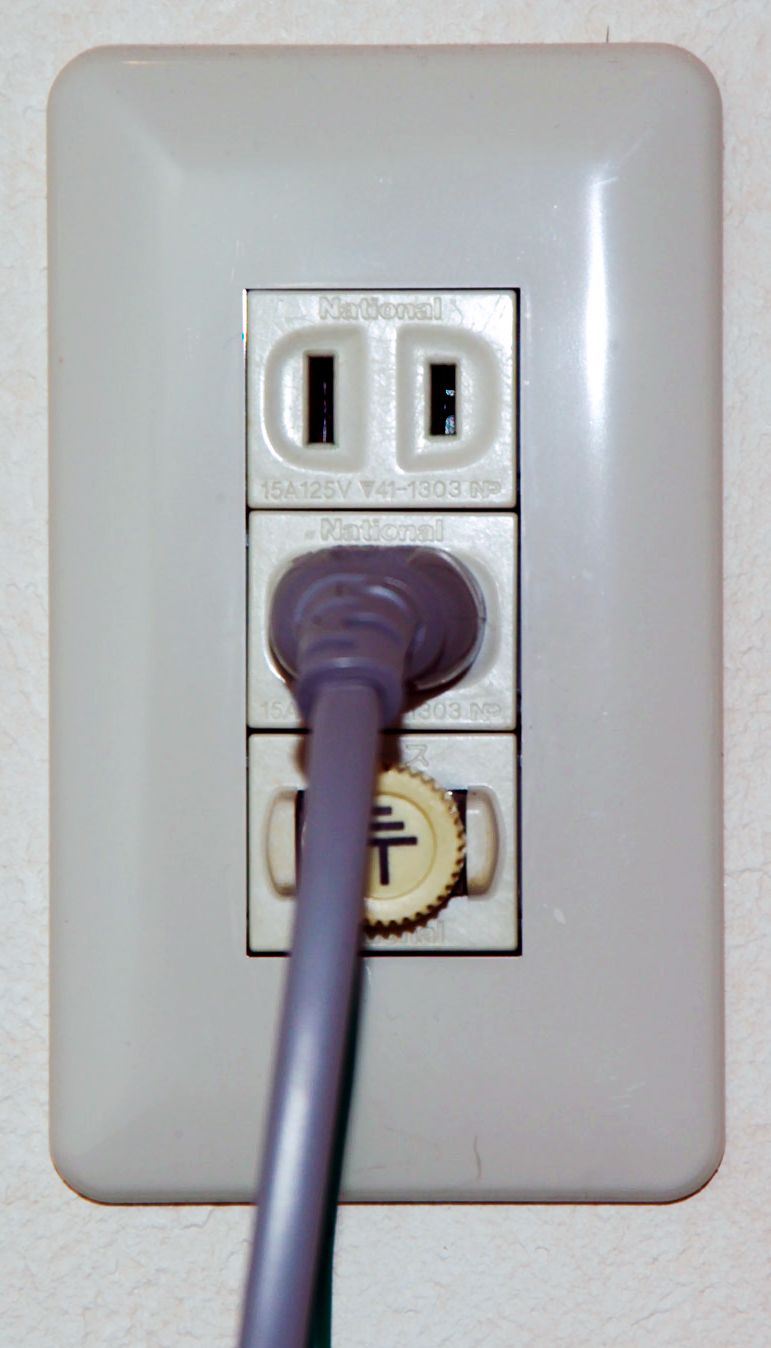
Using the power cord as a user interface, UI, from the MIT Tangible Media Group, is interesting in many ways:

Electrical Outlet with Cord - Japan 100VAC
  • Transparent design ala Norman.
  • Energy monitoring and such (why not also put in a current monitor?).
  • Microcontrollers and embedded systems. Related to IoT
Have always been in favor of cables... Like 802.3af Power over Ethernet, Standard USB power.

Wednesday, June 25, 2014

Serial Bridges... Preparing for the Internet of Things (IoT).

Many embedded applications come down to I/O with "lesser" serial bus on one side (sensors via I2C or SPI or something straightforward like Modbus) via an intelligent agent which then interacts with a "greater" serial bus on the other side (like to a stateful serial protocol like BACnet MSTP, Profibus, ARCNET or even Modbus or USB). This is the essence of a serial bridge.

Most embedded developers pick a micro controller they are familiar with and go directly to work building their bridge.

What if one instead envisioned first how such a bridge could communicate via the Internet of Things?
That is to say - What if one envisioned a TCPIP and web interface from the start?
The web interface would be used for
- startup and configuration (minimizing dip switches and other UI hardware)
- ongoing status (minimizing indicators and hardware UI)
- "dip in" protocols to watch data flow - like RESTful interfaces (MTConnect, Sunspec and others), Modbus TCP and various XML schemas, or even simple .CSV data log files.

Basically one minimally needs two serial interfaces and a TCPIP (Ethernet or Wifi) interface.
[Wifi is a tiny bit harder to auto-configure - but not impossible].

The big problem was always price for TCPIP. And this was usually made worse by the fact that the TCPIP part was an after-thought or add-on - which had to be engineered /into/ the bridge. So what about taking a (cheap) TCPIP intrinsic part and using it "incidentally" as a serial bridge?

The Lantronix xPico is an embodiment of such a bridge, and a particularly "right sized" and economical version. Small ARMs and some recent x86 (Vortex86, Intel and VIA) are getting close,
but none have the sharp focus of the xPico... it being a child of a programme for TCPIP to serial bridging, which just recently branched into multiple serial. There are other small TCPIP UI systems with possible multiple serial... like Moxa and Digi. It is just that the price, tools and possibilities seem uniquely congruent with the xPico.

Only issue with xPico is actually humanly getting access to the two serials via the Hirose. The DKs have this... but also a bunch of excess. Ended up making a breakout DIP40 for prototype work... and working to a policy of keeping all useful pins exposed in viae or test points. See previous blog on breakout pins and APIs.
 
http://albertputnam.blogspot.com/2013/12/new-devices-just-give-us-pins-and-apis.html
Sunday, June 22, 2014

Wearable Computers - Small Form Factor Redux

Was a bit surprised to find the definition of wearable computers so narrow.

The wearable computer I always wanted would have no intrinsic display or I/O. Have commented on these small forms for various purposes before.
http://albertputnam.blogspot.com/2013/11/minimal-portable-pc-usb3-hdmi-110g.html
It would have a battery, lots of compute, memory and storage, and would have IO ports like USB and HDMI. It would not be wireless locally, but would use a PAN (like Ethernet or USB).
Bluetooth would be okay... though it bleeds to WAN if intrinsic. External connect would be WiFi or 4G (again best if not intrinsic but via IO), but a direct Ethernet nearby is optimal. 802.3af Power over Ethernet would be preffered charging, but also via USB. Ideally wearable solar or energy harvesting would be integrated or integrable.

Do not want to be locked to any specific display or data entry method. Want I/O to be whatever is at hand. Maybe UI can be Oculus Rift ? ... for another post? And WAN disconnect to be guaranteed by using/executing a physical/visible/tangible mechanism.

[Update 140707: Interesting offering ECS LIVA . Available Newegg . Small and battery powerable.
Out of Stock Newegg with reviews].

Monday, November 18, 2013

Minimal portable PC – USB3, HDMI, 10G Ethernet, 5V (internal battery), 10G RAM, 100G SSD, Under 1kg, Under 15W.

Had previously sought a minimal PC.
Still looking.

And, okay, will take an integrated display if one is forced into the package. This is almost a reality with the Microsoft Surface and related tablets. http://en.wikipedia.org/wiki/Surface_Pro_2
USB3 but sadly no devoted Ethernet... but via USB3 is possible.

CuBox is close but not USB3 (yet?). And not yet well Windows supported. http://en.wikipedia.org/wiki/CuBox

But it is very much within technical reach to meet the specs. Staying rather firm about no WiFi, Bluetooth, nor other wireless. Want the assurance of physically disconnecting those interfaces. See separate blog on WiFi tracking.

Basically run full latest modern OSes with all I/O (except network and video and those “could” be USB3 too – if the OSes could accept the USB3 devices at boot).  To repeat:

- Ethernet (up to Gigabit speeds – maybe 10G)
- USB 3
- HDMI
- 6hr+ battery. No fan.
- Form factor of small brick like book/tablet. Under one kg.
- Power over Ethernet (PoE) 802.3af, or power from a USB outlet.
- 8+G Memory, 100+G SSD, i7 based?


Sunday, January 6, 2013

LED Lighting Roundup - and Real LED Lamps

Roundup by Greentech’s Doug Widney
http://www.greentechmedia.com/articles/read/The-Top-Ten-LED-Lighting-Developments-of-2012
http://en.wikipedia.org/wiki/LED_lamp
Not a week goes by without an interesting gem at Greentech.
http://www.greentechmedia.com/

Here are some LED lamps which are within the margins of USB (and by transference 802.3af). Note they have a 120VAC adapter and can be converted (with some wiring work).

IKEA Jansjo white desk work light
http://www.ikea.com/us/en/catalog/products/90214233/

Target Room Essentials 074-14-0009 black desk work light
http://www.target.com/p/room-essentials-led-table-lamp-black/-/A-13557999
Picture on web is not quite a match to what is in store.

Wiring work to retrofit with USB connector and use cable and USB 1A wall adapter like
http://www.monoprice.com/products/product.asp?c_id=108&p_id=8857

Puzzle: Why do LED lamps (in the 5W range) not simply use USB power connector format and include a USB wall adapter for region? USB would be cheaper and easier for everyone in supply chain.
http://hardware.slashdot.org/story/12/07/24/028230/usb-30-100w-power-standard-seeks-to-end-proprietary-chargers

Wednesday, September 19, 2012

ESC Boston 2012 - Design East

Attended ESC Boston 2012. Now called Design East.
http://east.ubmdesign.com/
http://events.ubm.com/event/1713/esc-boston-embedded-systems-conference
http://en.wikipedia.org/wiki/Embedded_Systems_Conference
http://en.wikipedia.org/wiki/Embedded_Systems_Conference#ESC_Boston

Glad to see a few of the familiar faces and ask them about new trends in the industry.
Lantronix http://www.lantronix.com/ xPico
Microchip http://www.microchip.com/ Metering and Wifi
Various systems based on ARM processors
http://en.wikipedia.org/wiki/ARM_architecture
Our mantra is "more RAM". Even if just for one sensor and minimal OS features - still want DB and security - 256M minimum.

Power over Ethernet 802.3af and 802.3at.
http://en.wikipedia.org/wiki/Power_over_Ethernet
http://www.silvertel.com/

Should give positive mention to Symmetry http://www.symmetryelectronics.com/  for hosting Lantronix, Silvertel and others.

Looked at Wurth Ethernet 802.3af magnetics with LED. http://www.we-online.com/web/en/wuerth_elektronik/start.php

Toradex - USB sensors and ARM processors. http://www.toradex.com/

Interesting talk on Internet of Things http://en.wikipedia.org/wiki/Internet_of_Things
by Micheal Anderson of PTR http://www.theptrgroup.com/

Blogged before of Google Goggles to read meters. Visited Vision Components http://www.vision-components.com/en/  and looked at their smart cameras.

Tuesday, December 21, 2010

Small Portable Brick Computer Without Display

Have been seeking a small personal or embedded computer. The market is getting close but is still not there.

Want "laptop" or "palmtop" with power to run full modern Linux/Windows, but no screen nor keyboard nor mouse. All entry I/O attached via USB.

- Ethernet (up to Gigabit speeds)
- USB 2.0+ (4 port)
- HDMI
- eSATA or microSD (maybe)
- 6hr+ battery. No fan.
- Form factor of small brick like book/tablet. Under one kg.
- Power over Ethernet (PoE) 802.3af, or power from a USB outlet.
http://en.wikipedia.org/wiki/Power_over_Ethernet
    No integrated display. One gets to choose the display. Most importantly one gets to choose to not to carry a display. Use with HMD or projector (mini LED projector) or display (like hotel LED/LCD TV, or desktop monitor).

    No Wifi or other RF like 4G. RF is easy to attach via USB. The same attachment ease applies to external DVD/CD and other media and I/O. HDMI and eSATA can provide high bandwidth I/O.

    Battery is for riding out glitches and outages, for portability, and for peaking when USB and PoE charging are insufficient in their continuous rating.